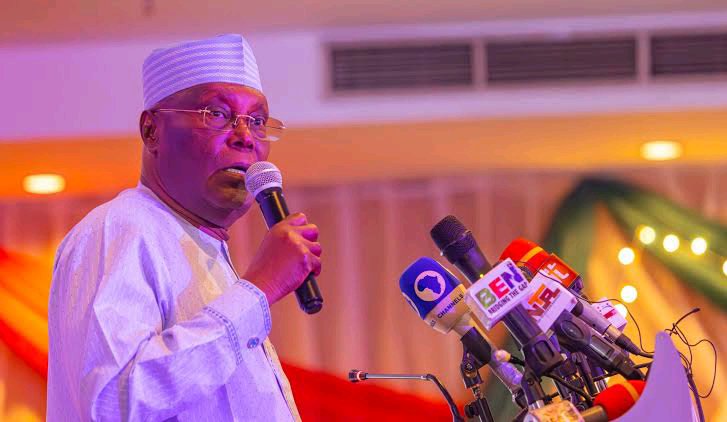
BREAKING: Former Vice President Atiku Abubakar Resigns From PDP

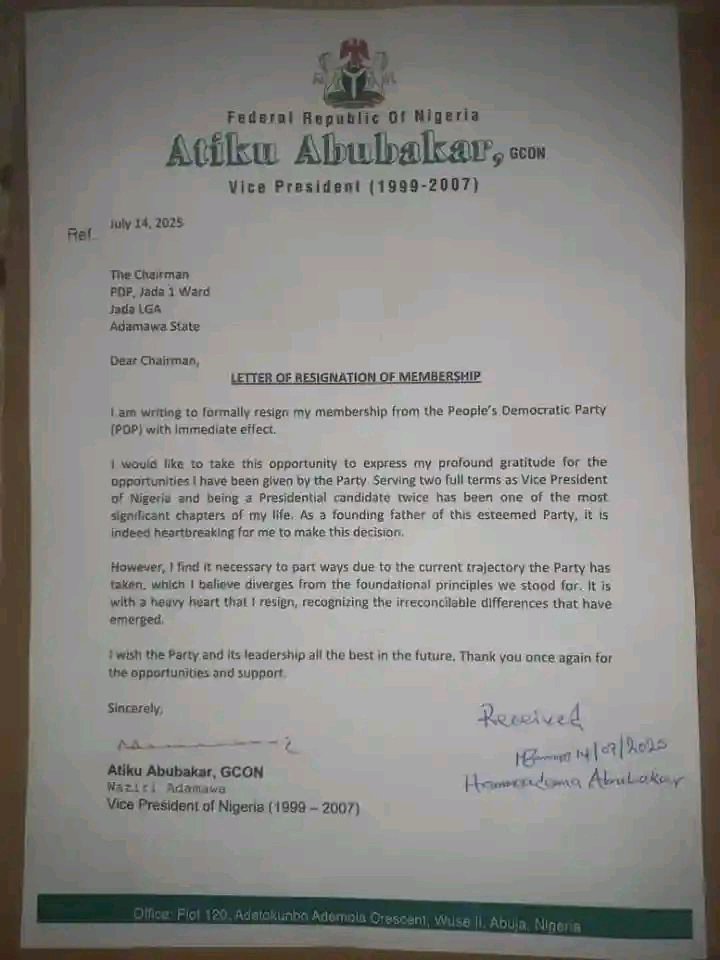
Former Vice President of Nigeria, Atiku Abubakar, has resigned his membership of the Peoples Democratic Party (PDP).

In a letter dated July 14 and made public on Wednesday, Atiku announced his resignation, stating that the decision was necessitated by what he described as a departure from the founding ideals of the party.

“I am writing to formally resign my membership from the People’s Democratic Party (PDP) with immediate effect,” the letter reads.

I would like to take this opportunity to express my profound gratitude for the opportunities I have been given by the Party. Serving two full terms as Vice President of Nigeria and being a Presidential candidate twice has been one of the most significant chapters of my life.

As a founding father of this esteemed Party, it is indeed heartbreaking for me to make this decision.

However, I find it necessary to part ways due to the current trajectory the Party has taken, which I believe diverges from the foundational principles we stood for. It is with a heavy heart that I resign, recognizing the irreconcilable differences that have emerged.”

Atiku also extended his best wishes to the PDP and its leadership, expressing appreciation for the support he received over the years.

Alongside Atiku’s exit, all local government and ward chairmen of Jada Local Government Area in Adamawa State—his home state—have also withdrawn their membership from the party.

The former vice president is expected to join the African Democratic Congress (ADC).

Dangote Announces Plan To Reduce Price Of Cooking Gas, Marketers Kick

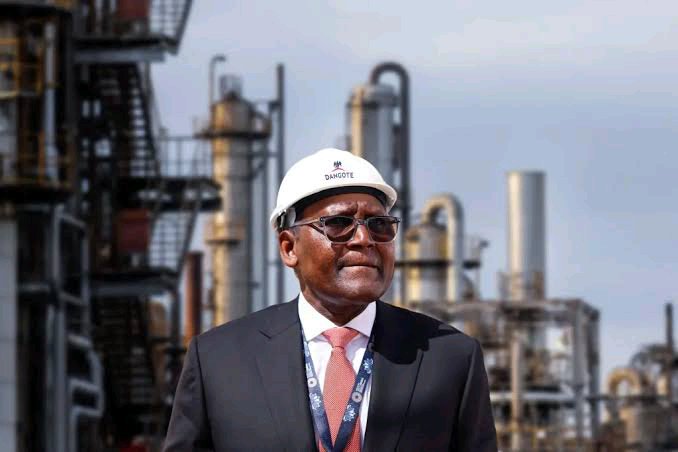
The President of the Dangote Group, Aliko Dangote, has announced plans to reduce the soaring price of Liquefied Petroleum Gas (LPG), commonly known as cooking gas, in the country.

ObasEmpire reports that he warned that if distributors fail to comply, his refinery may begin direct sales to end-users to reduce the cost.

This move, however, has triggered anxiety among existing market operators who view it as a step toward monopolising the LPG sector.

Speaking during a recent visit by members of the Lagos Business School CGEO Africa to his Lekki refinery, Dangote described the current cooking gas price as prohibitive for ordinary Nigerians, many of whom rely on firewood or kerosene for daily cooking.

Dangote stated, “The one that we didn’t write, which you must have seen, is LPG. Currently, we do LPG of about 2,000 tonnes per day. You know Nigeria is gradually moving to the usage of LPG. But I believe it is expensive, but right now we’re trying to bring down the price and make it cheaper.

If the distributors are not trying to bring it down, we’ll go directly and sell to the consumers, so that people will now transit from firewood or kerosene to LPG for cooking.”

He disclosed that the refinery currently produces 22,000 tonnes of LPG daily, with plans to scale distribution into the local market.

But not everyone in the sector shares Dangote’s enthusiasm. Several operators have expressed concerns that the billionaire’s latest move could destabilise the LPG ecosystem that has been built over the years.

The former Chairman of the LPG and Natural Gas Downstream Group at the Lagos Chamber of Commerce and Industry, Godwin Okoduwa, in an interview with Punch, said the plan reeks of monopolistic intent.

He cautioned, “I think it’s monopolistic. I think a market should be protected to encourage growth. The LPG industry in Nigeria grew from 70,000 metric tonnes in 2007 to over 1.3 million tonnes in 2022. That was done by collaboration, collaboration with the Federal Government, the NLNG, and offtakers. Everything was done in collaboration. It grew from 70,000 to 250 to 800, and now over a million.”

He emphasised that growth cannot be achieved through a monopoly, but rather through collaboration. He said, “Today, we are just under 5kg or 6kg per capita consumption in terms of LPG. Other countries are doing much more. South Africa is doing double digits, Morocco and Tunisia are doing double digits. We can do much more.

“So, we should, as an industry and as a country, focus on how to grow the LPG industry and not allow someone (to frustrate the players). Yes, he has invested; yes, it’s a capital economy, but he should not be allowed to frustrate the players.

There are people who have spent money, spent resources, even business and development, and someone just comes in to reap from the work that has been done. I’m sure he wouldn’t have built if there had not been an existing market. The work has been done, he should respect the market and let us grow. It shouldn’t be a zero-sum strategy. It should be collaborative.”

In his recommendation, the gas expert stated that although Dangote has the upper hand, he should consider embracing collaboration.

He added, “My advice to him is that the pie can be bigger. The Nigerian market is about 1.3 million tonnes. The Nigerian LPG market can be 5 million tonnes. He should work towards collaboration rather than competition, because at the end of the day, everybody benefits.”

Told that Dangote’s major concern is to bring the price of cooking gas to a rate where everybody can afford it and stop cooking with firewood, Okoduwa retorted, “I have news for him. He should go to the Northeast, where you have the least consumption of LPG. He should go to the Northeast and start developing the LPG infrastructure there. I think we will tell him thank you for that.”

Also reacting, the Executive Secretary/CEO of the Nigerian Association of Liquefied Petroleum Gas Marketers, Bassey Essien, dismissed Dangote’s proposal as “unrealistic.”

He said, “I am saying that it’s unrealistic. What is the position with PMS? Has the refinery been able to sell petrol directly to you and me into our cars at a very cheap rate?”

Buhari was high in spirit night before his death says Mamman Darua

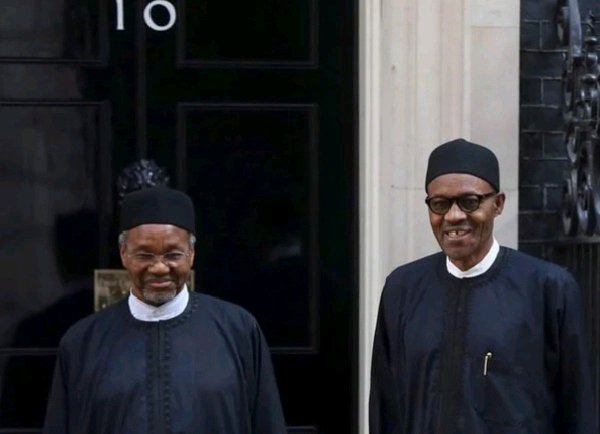
Mamman Daura, nephew of former President Muhammadu Buhari, says the late Nigerian leader was in good spirits hours before his death.

Buhari passed away on Sunday at the age of 82 in a clinic in London, the United Kingdom.

Daura told ThisDay that he spent Saturday evening with Buhari at the clinic, where he had been receiving medical care.

He said Buhari was cheerful and talkative and even made plans to return to Nigeria later in the week after his discharge.

We were together on Saturday, talking and laughing, and Buhari was in high spirits in the London Clinic where he was admitted,” Daura said.

We talked about everything. He even had the plan to depart for Nigeria upon his discharge this week and made sure that arrangements were made to sort out the hotel bills of everybody who was in London on his behalf before departing.”

Daura said he left Buhari around 9 p.m. on Saturday, intending to see him again on Sunday afternoon.

But by midday on Sunday, he said Buhari’s condition took a sharp turn for the worse.

“I left him around 9pm on Saturday in high spirits and promised to see him on Sunday afternoon. He was looking forward to his doctor’s visit on Sunday morning,” Daura said.

“But around midday, he started having breathing challenges, and doctors rushed to his side to try and manage it. But unfortunately, around 4.30 pm, he gave up the ghost.”

The remains of the late former president departed the European country for Nigeria on Tuesday.

President Bola Tinubu is expected to receive the corpse for burial scheduled later today in Daura, Katsina state.

Shettima Arrives in London to Escort Buhari’s Remains Back to Nigeria.

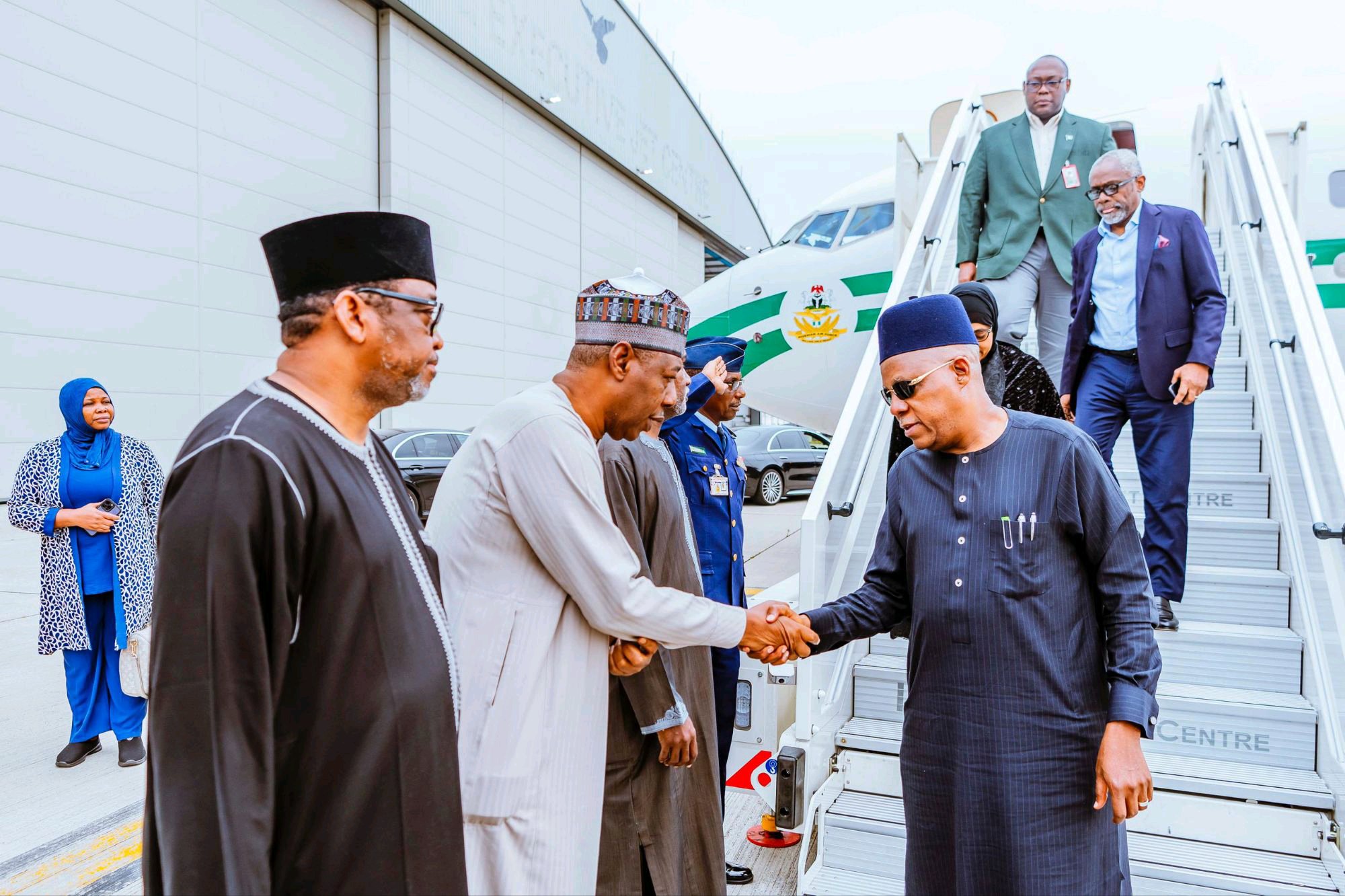
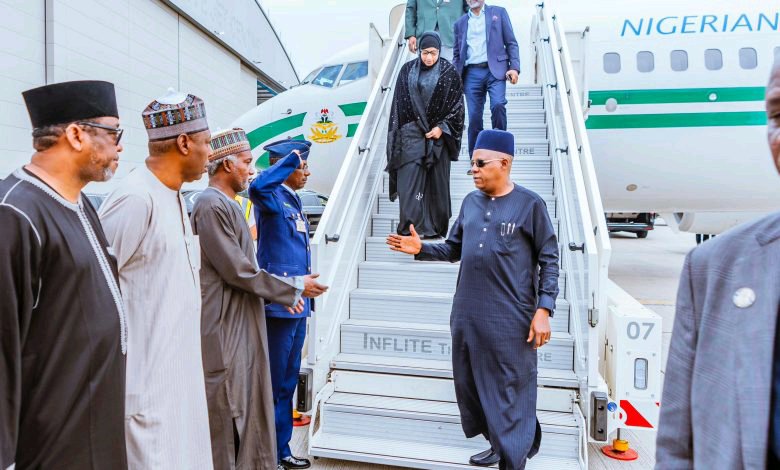
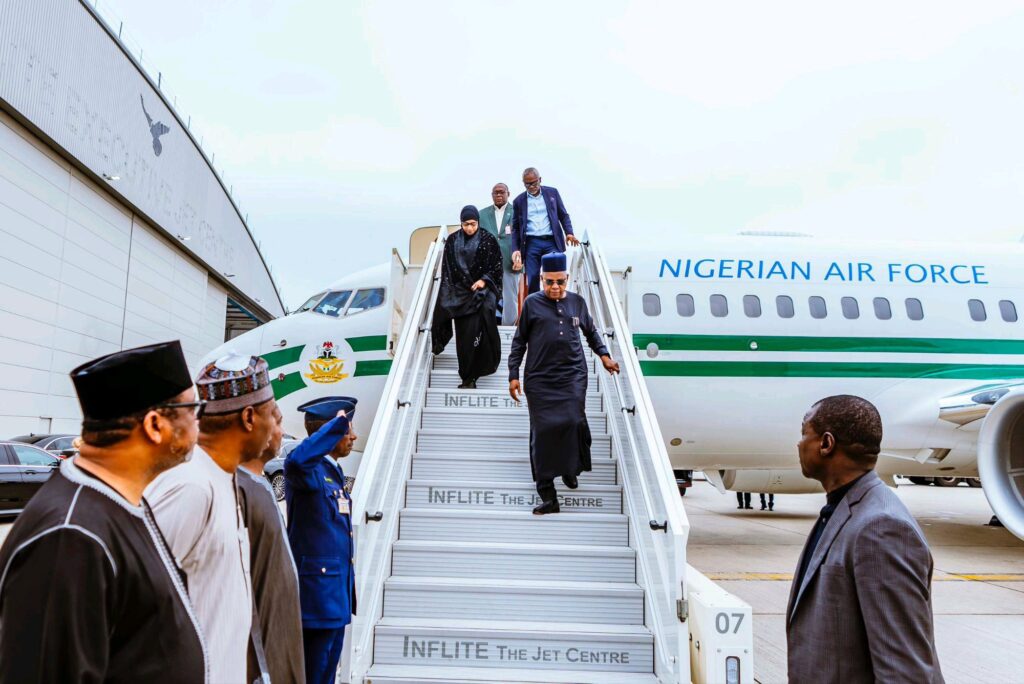
Vice President Kashim Shettima arrived in London on Monday morning following President Bola Ahmed Tinubu’s directive to accompany the remains of former President Muhammadu Buhari back to Nigeria.

He was received by Borno State Governor, Professor Babagana Zulum, and the Minister of Foreign Affairs, Ambassador Yusuf Tuggar.

The late President Buhari, aged 81, was confirmed dead on Sunday after passing away at a private clinic in the United Kingdom where he had been receiving medical care.

His death marks the end of an era for one of Nigeria’s most prominent political figures, who served two terms as civilian president after a previous stint as military head of state.

The late president is expected to be laid to rest today in his home town in Daura, Katsina State.

Security Operatives Look Away As LP Agent Is Slapped During Lagos LG Poll

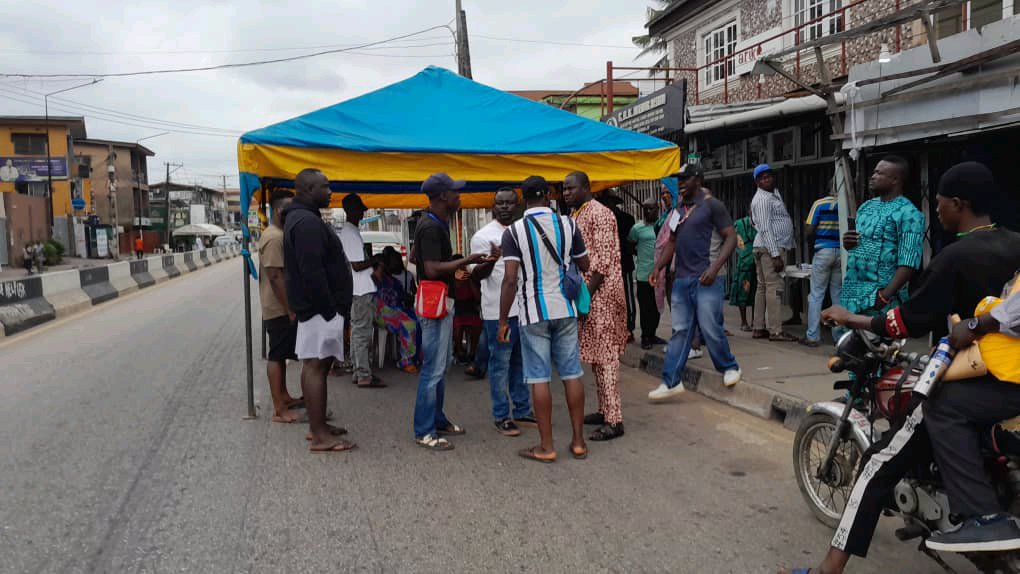
There was tension on Saturday at Polling Unit 027, Yaya Abatan, Ogba, in the Ifako-Ijaiye Local Government Area of Lagos State, as aggrieved loyalists of the All Progressives Congress (APC) assaulted a Labour Party (LP) agent, Spencer Dominic, during the local government elections.

Naija Nreports that the incident occurred shortly before APC chairmanship candidate, Usman Akanbi Hamzat, arrived at the polling unit to cast his vote.

Trouble reportedly started when the LP agent positioned himself behind electoral officials, allegedly to observe and confirm voter identities

According to eyewitnesses who spoke with Daily Trust, some APC supporters objected to his presence at that spot and ordered him to move. When he resisted, they pounced on him, dragged him, and slapped him in full view of security operatives, who reportedly stood by and took no action.

The scuffle was later de-escalated by concerned individuals who intervened to restore order at the unit.

Speaking after the attack, Spencer Dominic told Daily Trust that he was merely trying to uphold electoral integrity.

He explained, “I stayed behind the electoral officers, watching the people coming to vote to confirm their voter cards. When the chairman came and asked me to leave the place, I said no, that I needed to view the voter cards of the people.

Then, the APC people started beating me.”

In defence of the incident, a chieftain of the APC, Gbenga Adebowale, accused the LP agent of violating polling unit protocol.

Adebowale said, “The chairman of the council is the existing chairman, and by virtue of that, if he wants to join the queue, nobody should question him.

You, as an agent, are now asking him for his voter card? That is unacceptable. There are rules guiding agent conduct, you are not supposed to be behind the electoral officers. That position can incite trouble.”

The election across Lagos State was generally marked by low voter turnout, with many polling units witnessing sparse participation

UNIZIK Law Student, Chioma Isabella Ajana, Who Lost Her Room Key Ði£s After Hostel Mistress Allegedly Refused To Provide Spare Key For Her To Access Her Diabetes Medication Unless She Paid N120k

A law student of the Nnamdi Azikiwe University (UNIZIK), Awka, has di£d and her colleagues are seeking justice as they blame her hostel mistress.

Ajana Isabella, an occupant of Elmada hostel in Unizik, and her roommates reportedly lost their room key and needed a new one.

However, students alleged that when they approached their hostel mistress, identified as Madam Bright, for a spare key, she insisted that they pay for the spare as the hostel’s policy demands

‎The price for the spare key was allegedly pegged at N120,000 and the three roommates had to bring N40,000 each.

‎The students begged that they could not afford that amount right away and Ajana – said to be diabetic – desperately needed her insulin medications.

‎However, their pleas were ignored and Ajana’s condition deteriorated until she collapsed and was rushed to the hospital on Sunday, July 6, and she di£d on Wednesday, July 9.

‎Unizik students are now seeking justice with the hashtag #Justice4Ajana.

REVEALED: Trump’s Visa Restrictions Tied to Nigeria’s Rejection of U.S. Asylum Deal

Fresh details have emerged linking the recent visa clampdown on Nigerians by former U.S. President Donald Trump to Nigeria’s refusal to accept asylum seekers—particularly deportees from American prisons

Minister of Foreign Affairs, Ambassador Yusuf Tuggar, made part of the revelation while speaking on Channels Television’s Politics Today on Thursday evening.

Tuggar disclosed that the U.S. had been pressuring African countries, including Nigeria, to receive Venezuelan deportees, many of whom are ex-convicts.

He described the request as unjust.

You have to also bear in mind that the US is mounting considerable pressure on African countries to accept Venezuelans to be deported from the US, some straight out of prison,” Tuggar said.

It will be difficult for a country like Nigeria to accept Venezuelan prisoners into Nigeria. We have enough problems of our own. We cannot accept Venezuelan deportees to Nigeria, for crying out loud. We already have 230 million people. You will be the same people that would castigate us if we acquiesce to accepting Venezuelans from US prisons to be brought in,” he added.

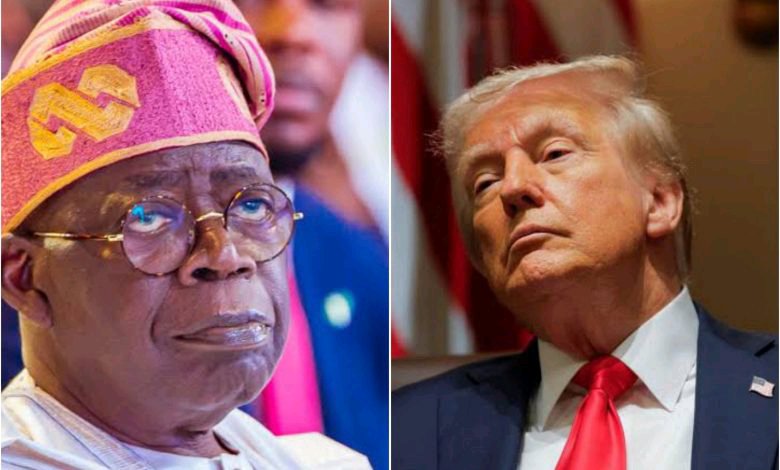
The minister’s comments come amid speculation that Trump’s imposition of a 10 per cent tariff on Nigerian exports, alongside the new U.S. visa restrictions, were retaliatory responses to Nigeria’s stance on asylum deportees and its recent outreach to BRICS nations.

Tuggar, however, dismissed the notion that the tariff hike was directly linked to President Bola Tinubu’s attendance at the BRICS summit in Brazil.

The issue of tariffs may not necessarily have to do with us participating in BRICS,” he said.

On Tuesday, the U.S. Embassy in Nigeria revised its visa issuance policy, reducing validity for Nigerians to a single-entry visa lasting just three months. While the embassy claimed the change was based on visa reciprocity, Tuggar refuted this.

The claim of reciprocity is false,” he said. “We issue them five-year multiple entry visas, the same way that they issue regular travellers five-year multiple entry visas.”

He explained that Nigeria had only modified its system by introducing online electronic visas to improve efficiency.

“What Nigeria has done that differs is simple. We used to have a visa-on-arrival that wasn’t running efficiently. We introduced these online electronic visas so that it saves you time.”

According to diplomatic sources, Washington has been lobbying several countries to serve as temporary host nations for asylum seekers while their cases are processed—a period that could last up to seven years. While some countries have conceded to this arrangement, Nigeria has remained firm in its rejection.

Tuggar further warned that yielding to the U.S. request could open the floodgates for more deportations in future.

The issue of accepting Venezuelan deportees, honestly, I don’t think is something that Nigeria is in a position to work with. And I think it would be unfair to insist that Nigeria accepts 300 Venezuelan deportees. Maybe that might just even be the beginning.”

Observers say the Trump administration’s pressure tactics—often characterized by punitive measures such as trade sanctions and visa restrictions—were part of a broader strategy to gain leverage in diplomatic negotiations. The visa restrictions, many believe, are being used to draw Nigeria back to the negotiation table.

Since assuming office, Trump has signed a raft of executive orders to expedite the deportation of undocumented migrants, many of whom are asylum seekers. In a widely condemned move, the U.S. also pushed for the deportation of non-nationals to third-party countries.

African nations, including Libya, Rwanda, South Sudan, and Djibouti, were reportedly identified as target destinations, alongside Central American states like El Salvador and Panama. A few of these countries have already received deportees under such arrangements.

The U.S. was also said to have requested electronic visa access for its citizens seeking entry into Nigeria, without visiting Nigerian embassies. But sources familiar with the talks said Nigeria turned down the proposal, citing the lack of similar privileges for its own citizens in the U.S.

In its revised visa policy, the U.S. embassy listed additional conditions Nigeria must meet to qualify for improved visa reciprocity, including the issuance of secure travel documents, effective visa overstay management, and the sharing of criminal and security data with American authorities.

It is understood that Washington also seeks access to Nigeria’s criminal database in order to identify and deport Nigerian nationals with prior criminal records currently residing in the United States.

Breaking: Tinubu Not Responsible For U.S Decision To Restrict Visa For Nigerians – Presidency

The presidency has debunked the claim that the American government’s decision to restrict visas for Nigerians is due to President Bola Tinubu’s decision to stop issuing 5-year multiple-entry visas for US citizens.

According to a statement on Thursday by the presidency, President Tinubu has never stopped issuing the 5-year multiple-entry visas for US citizens.

The statement issued by presidential spokesperson Bayo Onanuga said that, upon assuming office, President Tinubu issued a service-wide directive for Nigeria to implement all bilateral agreements with other nations and adhere to the principle of reciprocity in diplomatic relations.

The clarification comes amid the uproar generated by the American government’s decision to limit most non-immigrant and non-diplomatic visas issued to Nigerian citizens to single-entry visas with a three-month validity period.

However, some reports claimed the action of the U.S government was influenced by the decision of the Tinubu government to stop issuing 5-year multiple-entry visas for US citizens.

ObasEmpire reports that Onanuga, however, described such reports as misinformation and fake news.

Contrary to misinformation and fake news circulating online, President Bola Ahmed Tinubu has never stopped issuing 5-year multiple-entry visas for US citizens, in accordance with the principle of subsisting bilateral agreements and reciprocity.

Immediately after assuming office, President Tinubu’s administration issued a service-wide directive that Nigeria implement all bilateral agreements with other nations and adhere to the principle of reciprocity in diplomatic relations.

The Ministry of Foreign Affairs has clearly stated the position of the Federal Government of Nigeria on the recent adjustment made by the United States’ non-immigrant visa policy for Nigerians.

The Ministry and other senior government officials will continue to engage with the United States to address the unfavourable restrictions in a just and fair manner that reflects the mutual respect and partnership that so exist between our two friendly nations,” the statement read.

The presidency added that the claim by the U.S government that its recent visa policy actions are influenced by reciprocity does not reflect the actual situation of things, as Nigeria has not deviated from agreements with the American government.

We want to reiterate that the US government’s claim of reciprocity as the reason for its current visa policy towards Nigeria does not accurately reflect the actual situation.

The Nigerian government has not deviated from granting US citizens a 5-year multiple-entry non-immigrant visa, just as the US has continued to grant the same to Nigerians,” it said.

The Nigerian government added that its 90-day single-entry Visa validity period only applies to the newly introduced e-Visas, a short-term visa category for tourists and business people who may not wish to undergo the standard visa application process and wait.

It added that it would continue to engage the American government to resolve any issues that have led to the recent visa restrictions on Nigerians.

The 90-day single-entry Visa validity period only applies to the newly introduced e-Visas, a short-term visa category for tourists and business people who may not wish to undergo the standard visa application process and wait. The e-visa replaces the now obsolete Visa-on-arrival, which was inefficient and often used as a means of extortion. The e-visa is a fast, online process that does not require the applicant to go to the embassy. Applicants receive the e-Visa within 48 hours of submitting their application.

The e-visa policy aligns with President Tinubu’s efforts to boost investment, trade, and tourism in the country, as well as promote the ease of doing business for non-nationals. Moreover, e-visas are a widely adopted global policy in dozens of countries.

Although Nigeria has an e-visa policy for citizens of the US and several other countries, the US has not reciprocated this gesture for Nigerians.

In the spirit of cooperation, mutual understanding, and partnership that have characterised the relationship between Nigeria and the United States over the decades, the Tinubu-led administration will continue to dialogue and engage with US authorities to resolve any issues that have led to the recent developments,” the statement concluded.

BREAKING: Supreme Court Upholds Okpebholo’s Victory in Edo Guber Election

The Supreme Court has affirmed the 2024 governorship election victory of Governor Monday Okpebholo of the All Progressives Congress (APC), dismissing the appeal filed by the Peoples Democratic Party (PDP) candidate, Asue Ighodalo.

In a unanimous decision by a five-member panel led by Justice Mohammed Garba, the apex court ruled that the appeal lacked merit. It upheld the earlier judgments of the Court of Appeal and the Edo State Governorship Election Petition Tribunal, which had both declared Okpebholo the validly elected governor.

The court held that Ighodalo and the PDP failed to present credible and admissible evidence to support claims of irregularities, including allegations of over-voting and substantial non-compliance with the Electoral Act.

Many of the documents presented, the court noted, were merely “dumped” on the tribunal without proper linkage to the allegations in 432 out of the 4,519 polling units.

Ighodalo had approached the apex court after the Court of Appeal, in its May 29 ruling, affirmed the tribunal’s dismissal of his petition. He argued that the lower courts failed to properly evaluate the evidence, and insisted that the election was not conducted in substantial compliance with the Electoral Act.

The PDP and its candidate had earlier contended before the tribunal that INEC failed to pre-record some sensitive materials and that results were allegedly manipulated in 765 polling units. They called 19 witnesses and tendered 153 BVAS machines used in 133 polling units, but the tribunal ruled that they failed to substantiate their claims.

INEC had declared that Governor Okpebholo polled 291,667 votes to defeat his closest rival, Ighodalo, who secured 247,655 votes.

Trump hosts five African leaders as tariffs, aid cuts bite

U.S. President Donald Trump is hosting five West African leaders on Wednesday for a “multilateral lunch” at the White House as the region reels from the impact of U.S. aid cuts.

The leaders of Liberia, Senegal, Gabon, Mauritania and Guinea-Bissau are expected to discuss key areas of cooperation, including economic development, security, infrastructure and democracy, according to a statement from the Liberian presidency. The White House has not provided further details.

The surprise meeting comes as the Trump administration has taken radical steps it said are meant to reshape the U.S. relationship with Africa

Earlier this month, U.S. authorities dissolved the US Agency for International Development, and said it was no longer following what they called “a charity-based foreign aid model” and will instead focus on partnership with nations that show “both the ability and willingness to help themselves.”

The U.S. African Affairs senior bureau official Troy Fitrell earlier this year said that Trump administration wants to focus on eliminating trade deficits with Africa.

Assistance involves a donor and a recipient, but commerce is an exchange between equals,” he said.

Critics say that the abrupt shift will result in millions of deaths.

A study published in the Lancet medical journal late last month projected that USAID’s dismantling and deep funding cuts would lead to more than 14 million additional deaths globally by 2030, including 4.5 million children.

West African countries are among the hardest hit by the dissolution of the USAID. The U.S. support in Liberia amounted to 2.6% of the country’s gross national income, the highest percentage anywhere in the world, according to the Center for Global Development.

Five nations whose leaders are meeting Trump represent a small fraction of the U.S-Africa trade, but they possess untapped natural resources. Senegal and Mauritania are important transit and origin countries when it comes to migration, and along Guinea Bissau are struggling to contain drug trafficking, both issues of concern for the Trump administration.

Liberia’s President Joseph Nyuma Boakai in a statement “expressed optimism about the outcomes of the summit, reaffirming Liberia’s commitment to regional stability, democratic governance, and inclusive economic growth

Gabon, Liberia, Mauritania and Senegal are among 36 countries which might be included in the possible expansion of Trump’s travel ban.