Trump Slaps Nigeria with 15% Tariff

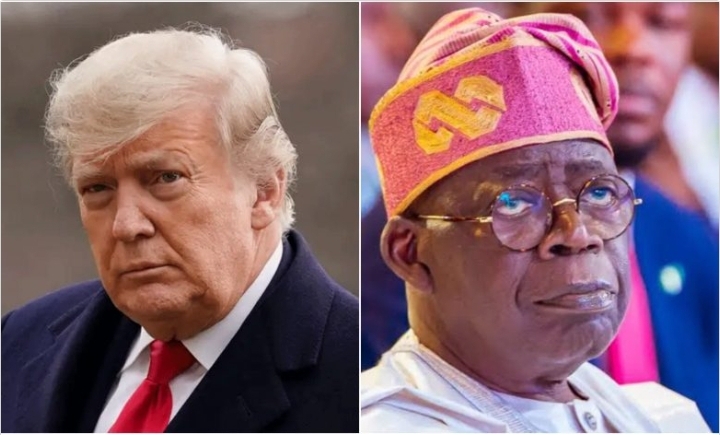
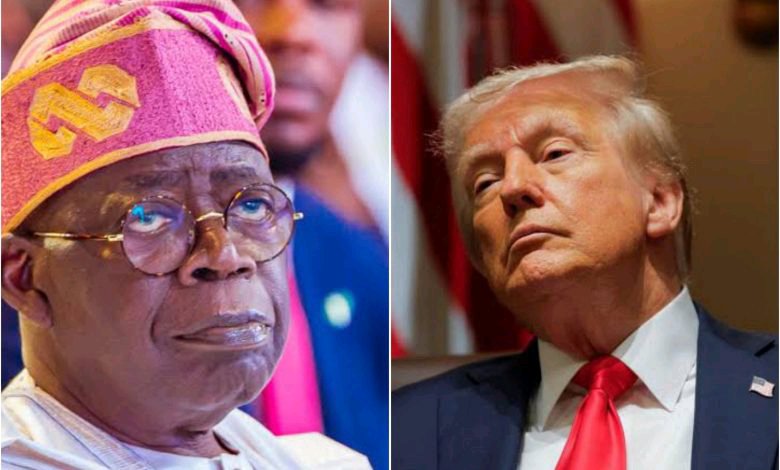
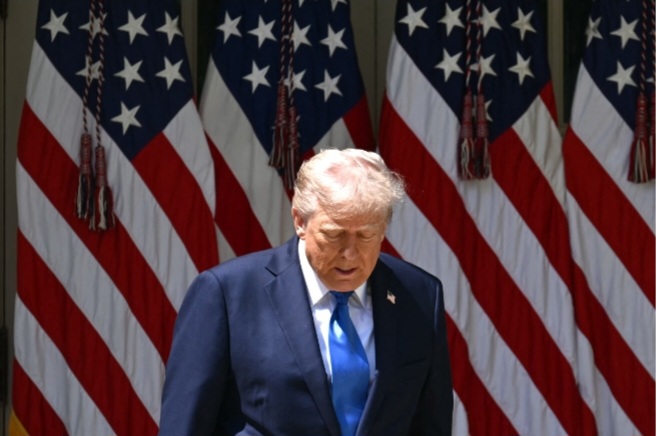
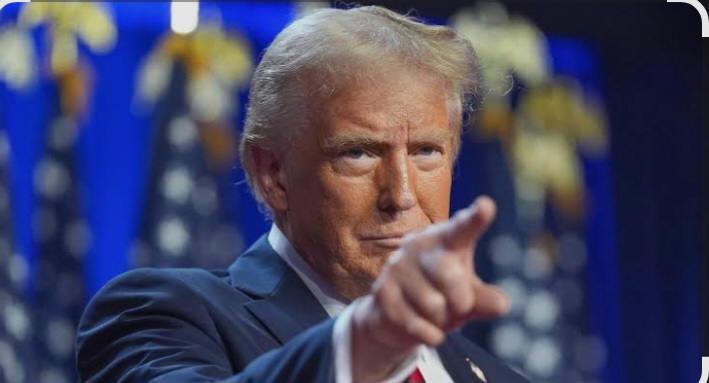
U.S. President Donald Trump has imposed a 15 percent tariff on imports from Nigeria, alongside several other African nations, under a sweeping executive order.

The directive is part of a move targeting over 60 countries.

Some nations, including Nigeria, South Africa, Algeria, and Ghana, face tariffs of up to 30 percent under the new regime.

Trump’s announcement triggered a scramble among world leaders to renegotiate trade terms with the United States, as his administration pushes forward with what analysts describe as one of the most aggressive protectionist strategies in recent history.

Reacting to the development, Akin Dawodu, Head of Sub-Saharan Africa at Citigroup, expressed concern that the tariffs could speed up Africa’s gradual shift toward non-Western trade blocs.

The continent’s already fragile trade relationship with the U.S. may weaken further, potentially strengthening ties with China, the EU, and Gulf states,” he said in comments published by Bloomberg

In Nigeria, the currency market registered a mild reaction. The naira slipped slightly to ₦1,555 per dollar at the official window, down from ₦1,550 the previous day. However, the parallel market held firm, with the rate unchanged at ₦1,533 per dollar.

Despite the mounting uncertainty, Nigeria’s equities market posted gains. The All Share Index on the Nigerian Exchange (NGX) climbed 1 percent to close at 141,263.05 points, while the overall market capitalisation increased to ₦89.373 trillion, up from ₦88.425 trillion.

REVEALED: Trump’s Visa Restrictions Tied to Nigeria’s Rejection of U.S. Asylum Deal

Fresh details have emerged linking the recent visa clampdown on Nigerians by former U.S. President Donald Trump to Nigeria’s refusal to accept asylum seekers—particularly deportees from American prisons

Minister of Foreign Affairs, Ambassador Yusuf Tuggar, made part of the revelation while speaking on Channels Television’s Politics Today on Thursday evening.

Tuggar disclosed that the U.S. had been pressuring African countries, including Nigeria, to receive Venezuelan deportees, many of whom are ex-convicts.

He described the request as unjust.

You have to also bear in mind that the US is mounting considerable pressure on African countries to accept Venezuelans to be deported from the US, some straight out of prison,” Tuggar said.

It will be difficult for a country like Nigeria to accept Venezuelan prisoners into Nigeria. We have enough problems of our own. We cannot accept Venezuelan deportees to Nigeria, for crying out loud. We already have 230 million people. You will be the same people that would castigate us if we acquiesce to accepting Venezuelans from US prisons to be brought in,” he added.

The minister’s comments come amid speculation that Trump’s imposition of a 10 per cent tariff on Nigerian exports, alongside the new U.S. visa restrictions, were retaliatory responses to Nigeria’s stance on asylum deportees and its recent outreach to BRICS nations.

Tuggar, however, dismissed the notion that the tariff hike was directly linked to President Bola Tinubu’s attendance at the BRICS summit in Brazil.

The issue of tariffs may not necessarily have to do with us participating in BRICS,” he said.

On Tuesday, the U.S. Embassy in Nigeria revised its visa issuance policy, reducing validity for Nigerians to a single-entry visa lasting just three months. While the embassy claimed the change was based on visa reciprocity, Tuggar refuted this.

The claim of reciprocity is false,” he said. “We issue them five-year multiple entry visas, the same way that they issue regular travellers five-year multiple entry visas.”

He explained that Nigeria had only modified its system by introducing online electronic visas to improve efficiency.

“What Nigeria has done that differs is simple. We used to have a visa-on-arrival that wasn’t running efficiently. We introduced these online electronic visas so that it saves you time.”

According to diplomatic sources, Washington has been lobbying several countries to serve as temporary host nations for asylum seekers while their cases are processed—a period that could last up to seven years. While some countries have conceded to this arrangement, Nigeria has remained firm in its rejection.

Tuggar further warned that yielding to the U.S. request could open the floodgates for more deportations in future.

The issue of accepting Venezuelan deportees, honestly, I don’t think is something that Nigeria is in a position to work with. And I think it would be unfair to insist that Nigeria accepts 300 Venezuelan deportees. Maybe that might just even be the beginning.”

Observers say the Trump administration’s pressure tactics—often characterized by punitive measures such as trade sanctions and visa restrictions—were part of a broader strategy to gain leverage in diplomatic negotiations. The visa restrictions, many believe, are being used to draw Nigeria back to the negotiation table.

Since assuming office, Trump has signed a raft of executive orders to expedite the deportation of undocumented migrants, many of whom are asylum seekers. In a widely condemned move, the U.S. also pushed for the deportation of non-nationals to third-party countries.

African nations, including Libya, Rwanda, South Sudan, and Djibouti, were reportedly identified as target destinations, alongside Central American states like El Salvador and Panama. A few of these countries have already received deportees under such arrangements.

The U.S. was also said to have requested electronic visa access for its citizens seeking entry into Nigeria, without visiting Nigerian embassies. But sources familiar with the talks said Nigeria turned down the proposal, citing the lack of similar privileges for its own citizens in the U.S.

In its revised visa policy, the U.S. embassy listed additional conditions Nigeria must meet to qualify for improved visa reciprocity, including the issuance of secure travel documents, effective visa overstay management, and the sharing of criminal and security data with American authorities.

It is understood that Washington also seeks access to Nigeria’s criminal database in order to identify and deport Nigerian nationals with prior criminal records currently residing in the United States.

Trump hosts five African leaders as tariffs, aid cuts bite

U.S. President Donald Trump is hosting five West African leaders on Wednesday for a “multilateral lunch” at the White House as the region reels from the impact of U.S. aid cuts.

The leaders of Liberia, Senegal, Gabon, Mauritania and Guinea-Bissau are expected to discuss key areas of cooperation, including economic development, security, infrastructure and democracy, according to a statement from the Liberian presidency. The White House has not provided further details.

The surprise meeting comes as the Trump administration has taken radical steps it said are meant to reshape the U.S. relationship with Africa

Earlier this month, U.S. authorities dissolved the US Agency for International Development, and said it was no longer following what they called “a charity-based foreign aid model” and will instead focus on partnership with nations that show “both the ability and willingness to help themselves.”

The U.S. African Affairs senior bureau official Troy Fitrell earlier this year said that Trump administration wants to focus on eliminating trade deficits with Africa.

Assistance involves a donor and a recipient, but commerce is an exchange between equals,” he said.

Critics say that the abrupt shift will result in millions of deaths.

A study published in the Lancet medical journal late last month projected that USAID’s dismantling and deep funding cuts would lead to more than 14 million additional deaths globally by 2030, including 4.5 million children.

West African countries are among the hardest hit by the dissolution of the USAID. The U.S. support in Liberia amounted to 2.6% of the country’s gross national income, the highest percentage anywhere in the world, according to the Center for Global Development.

Five nations whose leaders are meeting Trump represent a small fraction of the U.S-Africa trade, but they possess untapped natural resources. Senegal and Mauritania are important transit and origin countries when it comes to migration, and along Guinea Bissau are struggling to contain drug trafficking, both issues of concern for the Trump administration.

Liberia’s President Joseph Nyuma Boakai in a statement “expressed optimism about the outcomes of the summit, reaffirming Liberia’s commitment to regional stability, democratic governance, and inclusive economic growth

Gabon, Liberia, Mauritania and Senegal are among 36 countries which might be included in the possible expansion of Trump’s travel ban.

Elon Musk expresses regret over Trump posts after online feud

Tech billionaire Elon Musk has admitted that some of his recent social media posts about U.S. President Donald Trump “went too far”, following a highly publicized online feud between the two former allies

The Tesla and SpaceX CEO made the remark on Wednesday morning in a post on X, the platform he owns, after days of heated exchanges with Trump.

I regret some of my posts about President @realDonaldTrump last week. They went too far,” Musk tweeted.

The feud erupted shortly after Musk resigned from his role as head of the Department of Government Efficiency (DOGE), a position he had controversially held under the Trump administration.

Musk criticized Trump’s proposed “Big Beautiful Bill,” claiming it would reverse much of DOGE’s streamlining efforts.

As tensions escalated, Musk posted a series of inflammatory comments on X, supporting impeachment calls and accusing the president of ingratitude.

He also referenced unverified allegations linking Trump to Jeffrey Epstein, and warned that Trump’s tariff policies could lead the U.S. into recession.

Most of the contentious posts have since been deleted.

President Trump dismissed the idea of reconciling with Musk, telling reporters, “He was disrespectful to the office of the president.

I haven’t really thought about it actually. I would imagine he wants to speak to me. I would think so, if I were him, I’d want to speak to me.”

And maybe he already called… ask him whether or not he’s already called,” Trump added, noting that he would not oppose taking a call from the billionaire.

Musk’s shift in tone comes in the wake of violent protests in Los Angeles sparked by a federal immigration raid. The events appear to have influenced Musk’s stance, aligning him once again with the Trump administration.

Earlier this week, Musk reposted a statement from Vice President JD Vance praising the president’s hardline response to the riots, adding American flag emojis to show support.

He also shared a Truth Social screenshot of Trump demanding an apology from California officials for the unrest.

Vice President Vance offered a diplomatic take on the Musk-Trump spat in a recent interview:

The President is a little frustrated but he’s actually been restrained because he doesn’t want to be in some blood feud with Elon Musk.

“I think if Elon chills out a little bit everything will be fine,” Vance said.

Musk responded to the comment with a brief “cool”.

As of now, no direct conversation between Trump and Musk has been confirmed. Whether the two will reconcile publicly remains to be seen, but insiders suggest the door remains open on Trump’s terms.

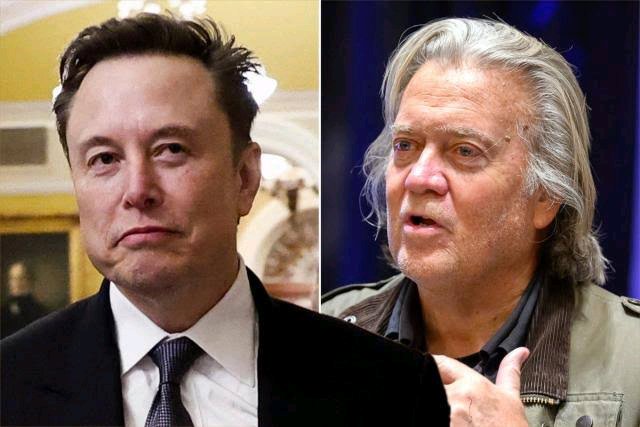
Steve Bannon Urges Trump To Size SpaceX And Deport Elon Musk Immediately

Former White House adviser Steve Bannon called on President Donald Trump to investigate Elon Musk’s immigration status and deport the South African tech billionaire after a bitter fight between Trump and Musk played out on Thursday, June 5.

They should initiate a formal investigation of his immigration status because I am of the strong belief that he is an illegal alien, and he should be deported from the country immediately,” Bannon, a MAGA insider, told The New York Times on Thursday.

Musk and Trump spent much of Thursday afternoon trading words after their dispute over Trump’s agenda-setting One Big Beautiful Bill Act escalated.

During an appearance on his “Bannon’s War Room” live webcast, Bannon attacked Musk, who until recently was the head of the White House’s Department of Government Efficiency (DOGE

Elon Musk is illegal, and he’s got to go,” Bannon said. “He’s illegal? Deport immediately.”

You’re going to ship these other people home. Let’s start with the South Africans, OK?” he added, alluding to the Trump administration’s sweeping immigration crackdown.

Musk, one of the largest donors to Trump’s 2024 presidential campaign at roughly $250 million, was born and grew up in South Africa before he emigrated to Canada and later moved to the U.S., where he became a citizen while growing his tech empire, which includes SpaceX, the social platform X, Tesla and other endeavors.

The Washington Post reported last year that Musk worked in the country illegally before gaining citizenship, prompting questions from Bannon and others about whether Musk’s citizenship is legal.

Bannon also noted Musk’s reported drug usage as potential ammo for prompting his deportation. The New York Times reported last week that Musk’s alleged use of ketamine and other substances on the campaign trail sparked concerns in Trump circles, but Musk denied the claims.

The drug thing is going to be investigated,” Bannon said.

Trump and Musk’s relationship began to sour in recent days as Musk lashed out over the Trump-backed megabill currently under review in Congress. Musk called it a “disgusting abomination,” while Trump pushed back and defended the bill.

Bannon said he supports Trump’s latest suggestion that Musk’s massive government contracts should be pulled

It needs dramatic action. I would pull all the contracts immediately,” Bannon said.

He also blasted Musk’s attacks against Trump, which escalated Thursday to a series of accusatory posts on his X platform that attempted to link Trump to convicted sex offender Jeffrey Epstein and claim credit for Trump’s election win.

President Trump empowered him more than anyone has ever been empowered in this government, had his back, promoted this guy, even when people like me said, ‘You’re making a mistake. This is a bad guy. He’s going to turn on you. He’s not with us. He’s also totally incompetent,’” Bannon said on War Room.

Then as soon as President Trump comes out today, and President Trump saying it in the nicest way possible about the bill … the guy gets up and starts tweeting the most vicious stuff you can tweet.”

Trump Slams ‘Crazy’ Putin as Russia Pummels Ukraine With Massive drone attack

‎US President Donald Trump called his Russian counterpart Vladimir Putin “crazy” on Sunday after Moscow launched a deadly barrage of drones against Ukraine, even as the warring countries completed a large-scale prisoner exchange.

‎At least 13 people were killed when Russia launched a record number of drones against Ukraine overnight to Sunday.

I’ve always had a very good relationship with Vladimir Putin of Russia, but something has happened to him. He has gone absolutely CRAZY!” Trump said in a post on his Truth Social platform.

I’ve always said that he wants ALL of Ukraine, not just a piece of it, and maybe that’s proving to be right, but if he does, it will lead to the downfall of Russia!” he added.

‎Earlier Sunday, Trump told reporters he was “not happy” about the latest attack on Ukraine and that he was “absolutely” considering increasing sanctions on Moscow.

I’ve known him a long time, always gotten along with him, but he’s sending rockets into cities and killing people, and I don’t like it at all,” he said.

‘Terror’ –

Ukraine’s emergency services described Sunday an atmosphere of “terror” in the country after a second straight night of massive Russian air strikes, including on the capital Kyiv.

‎Those killed in the latest Russian strikes included victims aged eight, 12, and 17 in the northwestern region of Zhytomyr, officials said.

Without truly strong pressure on the Russian leadership, this brutality cannot be stopped,” Ukrainian President Volodymyr Zelensky said on social media.

The silence of America, the silence of others around the world only encourages Putin,” he said, adding: “Sanctions will certainly help.”

‎In his social media post, Trump also criticized Zelensky, a frequent target of his ire, accusing him of “doing his Country no favors by talking the way he does.”

‎Everything out of his mouth causes problems, I don’t like it, and it better stop,” he said.

‎The European Union’s top diplomat, Kaja Kallas, also called for “the strongest international pressure on Russia to stop this war.”

Last night’s attacks again show Russia bent on more suffering and the annihilation of Ukraine,” she said on social media.

Call for sanctions –‎

‎‎German Foreign Minister Johann Wadephul also denounced the attacks.

Putin does not want peace, he wants to carry on the war and we shouldn’t allow him to do this,” he said. “For this reason we will approve further sanctions at a European level.”‎

Ukraine’s military said on Sunday it had shot down a total of 45 Russian missiles and 266 attack drones overnight.‎

Air force spokesman Yuriy Ignat said 298 drones were launched, adding that this was “the highest number ever.”

‎Four people were reported killed in Ukraine’s western Khmelnytskyi region, and four in the Kyiv region.

‎Two people were killed in the southern Mykolaiv region.

We saw the whole street was on fire,” a 65-year-old retired woman, Tetiana Iankovska, told AFP in Markhalivka village just southwest of Kyiv.

‎Russia said its strikes were aimed at Ukraine’s “military-industrial complex” and that it had brought down 110 Ukrainian drones.

‎The previous night, Russia had launched 14 ballistic missiles and 250 drones, wounding 15 people, according to Ukrainian officials.

‎Flights at Moscow airports suffered temporary closures due to Ukrainian drone activity on Sunday but no injuries were reported, officials said.

‎‎Ukrainian officials also reported Russian strikes overnight to Monday, but not on the same scale.

‎Two people were injured and a house was destroyed in the Zaporizhzhia region when “the enemy struck the village of Yurkivka”, Ivan Fedorov, the governor of the region, said in a Telegram post.

Major prisoner exchange –‎

‎‎The massive strikes on Ukraine came as Russia said it had exchanged another 303 Ukrainian prisoners of war for the same number of Russian soldiers held by Kyiv — the last phase of a swap agreed during talks in Istanbul on May 16.

‎That marked their biggest prisoner swap since Moscow launched its full-scale invasion in February 2022, with 1,000 captured soldiers and civilian prisoners in total sent back by each side.

‎Zelensky confirmed the swap was complete.

‎‎An AFP reporter saw some of the formerly captive Ukrainian soldiers arrive at a hospital in the northern Chernigiv region, emaciated but smiling and waving to crowds.

‎‎One former captive, 58-year-old Viktor Syvak, told AFP he was overcome by the emotional homecoming.

‎Captured in the Ukrainian port city of Mariupol, he had been held for 37 months and 12 days.

It’s impossible to describe. I can’t put it into words,” he said of the release.

AFP

House Republicans propose $5 billion private school Vouchers

WASHINGTON (AP) — House Republicans want to set aside up to $5 billion a year for scholarships to help families send their children to private and religious schools , an unprecedented effort to use public money to pay for private education.

The proposal, part of a budget reconciliation bill released Monday, would advance President Donald Trump’s agenda of establishing “universal school choice” by providing families nationwide the option to give their children an education different from the one offered in their local public school. Nearly all households would qualify except those making more than three times the local median income.

Supporters of private school vouchers say they want to give families assigned to low-performing schools more choices.

“Giving parents the ability to choose the best education for their child makes the (American Dream) possible,” said Republican Louisiana Sen. Bill Cassidy , who sponsored a similar proposal in the Senate.

The program would be funded by donors who could contribute money or stock. In turn, they would receive 100% of the contribution back in the form of a discount on their tax bills. It would allow stock holders to avoid paying taxes that would be levied if they donated or transferred the stock.

Critics decried the proposal, saying it would aid the wealthy at the expense of the public school systems that serve the overwhelming majority of students. They said it would set up a tax shelter allowing savvy investors to make money under the guise of a donation.

All of this comes as the Trump administration downsizes the Education Department and cuts resources to public schools, including $1 billion in mental health grants and funding for teacher training .

“This is a significant threat,” said Sasha Pudelski of AASA, the School Superintendents Association. She added that states that have voucher programs often end up assisting families that were already paying for private school. “It’s opening the door even wider to what has already plagued voucher programs around the country, which is rampant waste, fraud, and abuse.”

Similar tax-credit scholarship and private school voucher programs have proliferated in red-leaning states like Texas, which just passed a $1 billion program. Public school advocates worry the programs hurt enrollment and per-pupil funding, ultimately leaving fewer resources for families that choose public schools.

The Associated Press’ education coverage receives financial support from multiple private foundations. AP is solely responsible for all content. Find AP’s standards for working with philanthropies, a list of supporters and funded coverage areas at AP.org.

See comments below.