
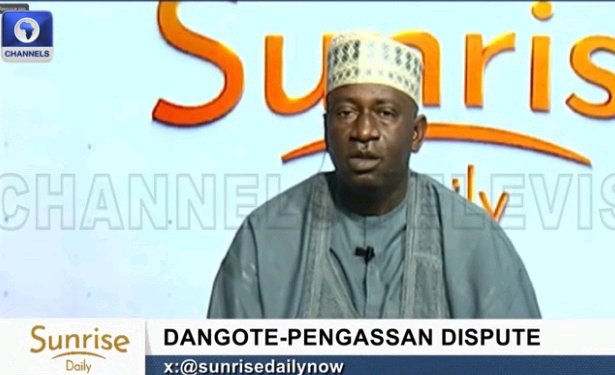
Anybody That buys 1 litre of fuel in Nigeria,NUPENG and PENGASSAN Are getting money out of it- Danzaki

Mr. Lawal Danzaki, National President of the Association of Distributors and Transporters of Petroleum Products (ADITOP), has accused the Petroleum and Natural Gas Senior Staff Association of Nigeria (PENGASSAN) and the Nigeria Union of Petroleum and Natural Gas Workers (NUPENG) of extorting truck owners and marketers, warning that such practices are worsening hardship for Nigerians.

Danzaki, who made the allegations during an interview on Channels Television on Tuesday, September 30, 2025, said the unions were collecting daily levies from petroleum marketers and truck owners who were not even their members.

As I’m talking to you now, the NUPENG PTD are getting a lot of money on daily basis from the truck owners and the marketers of filling station whereby we are not their members. Somebody that own filling station, a marketer, is not a NUPENG member or PENGASSAN. Somebody that own a truck is not their member, but they will put their shop for any depot that is loading. We must pay them between 100,000 to 150,000 before our truck load,” he said.

According to him, these charges eventually increase fuel prices for ordinary Nigerians. “And this kinds of money we are giving them, they are extorting us and at the end we are extorting Nigerians. The burden is going back to the Nigerians. Anybody that buys one liter in Nigeria, the NUPENG and PENGASSAN are getting money out of that,” Danzaki alleged.

The ADITOP President further criticized the unions for attempting to control the operations of private investors, including Africa’s largest refinery. “Dangote build his refinery. They wanted to control his refinery that when will he work and when he will not work. So this kind of thing that NUPENG and PENGASSAN are doing, they should come back to their drawing board. They know that their union is to help their workers and they will get their entitlement from the dues they are collecting from the salary of their workers,” he stated.

Danzaki also noted that union membership must be voluntary and should not be imposed on truck owners or petroleum marketers. “They have to understand that there is freedom of association. There is freedom of speech in this country. So they should not force people to be their members. That’s what they are doing all over the years,” he added.
Nigerians to Pay Extra N45 Per Litre of Petrol From 2026 Under New Tax Law

From January 2026, Nigerians could face higher fuel costs as a result of the new Nigeria Tax Administration Act, which introduces a five per cent surcharge on refined fossil fuel products. If the current pump price of petrol remains at N900 per litre, motorists would pay an additional N45 on every litre purchased.

The surcharge is part of four new tax reform bills signed into law by President Bola Tinubu on June 26, 2025, aimed at broadening government revenue streams, encouraging clean energy adoption, and reducing reliance on fossil fuels.

According to the Act, the surcharge will be applied to chargeable transactions, including the supply, sale, or payment for fossil fuel products—“whichever occurs first.” The levy covers petrol, diesel, aviation fuel, and other refined petroleum products.

However, some products are exempt: household kerosene, cooking gas, Compressed Natural Gas (CNG), and renewable energy sources such as solar, wind, and hydropower.

The Act states: “A surcharge is imposed at five per cent on chargeable fossil fuel products provided or produced in Nigeria, and shall be collected at the time a chargeable transaction occurs.”

Implementation and Oversight

Although the law sets January 2026 as the intended commencement date, the exact timing remains subject to a formal directive from the Minister of Finance and Coordinating Minister of the Economy, Wale Edun. The minister is expected to announce the effective date through an order published in the Official Gazette.

Administration of the surcharge will fall to the Federal Inland Revenue Service, which will be rebranded as the Nigeria Revenue Service in 2026. The agency has been empowered to collect the levy on a monthly basis and issue further regulations for its enforcement.

Economic and Social Implications

Analysts say the measure reflects government efforts to boost non-oil revenues amid growing fiscal pressures and rising debt obligations. Yet its impact could be controversial, as higher fuel prices often have ripple effects on transportation, food costs, and inflation.

Some argue that the surcharge may accelerate Nigeria’s transition to renewable energy by discouraging heavy dependence on fossil fuels. Critics, however, warn that the immediate effect will be an increased burden on citizens already grappling with high living costs.

The new Act forms part of a broader package of reforms, which also includes the Joint Revenue Board (Establishment) Law and the Nigeria Revenue Service (Establishment) Act, all geared toward strengthening revenue collection and fiscal transparency.